Comment

Cooking with Hannah: Braised Parsnips

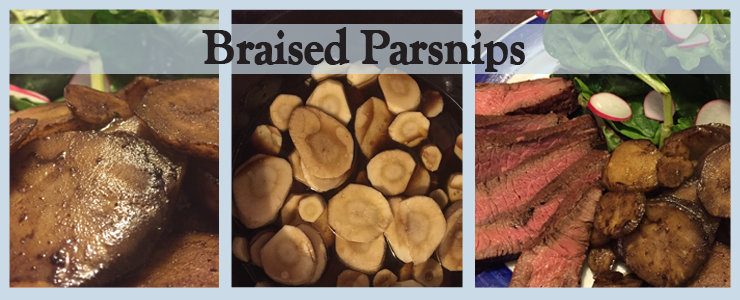
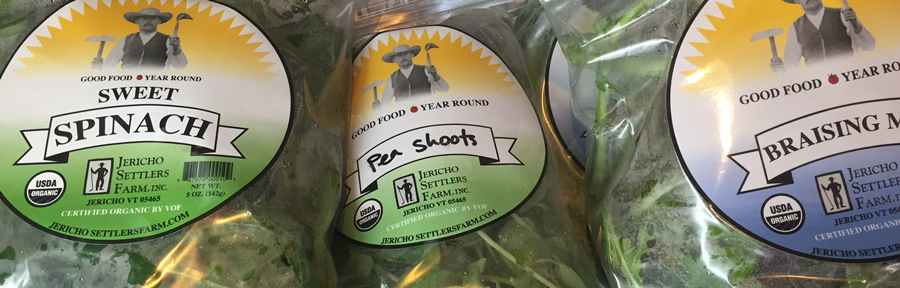
My favorite way to cook parsnips is to braise them. A little balsamic vinegar balances the sweetness of parsnips pretty well. Nice side dish, along with some fresh JSF greens.

~ 2 lbs of parsnips, peeled, sliced thinly
1/2 cup chicken broth or vegetable stock
1/4 cup balsamic vinegar
1/8 cup olive oil
splash of soy sauce
spices! (I like adding aleppo. I bet it would be good with ginger. Or how 'bout GREEN SHALLOTS!? Whatever you like!)

Put it all in a heavy skillet or cast-iron pan. Bring the liquid to a boil, then simmer until parsnips are soft and liquid has made a yummy glaze.

-Hannah Harwood Doyle

Comment

Sample CSA Shares Now Available

1 Comment

Sample CSA Shares Now Available

1 Comment

Beet and Black Bean Veggie Burgers

Comment

Beet and Black Bean Veggie Burgers

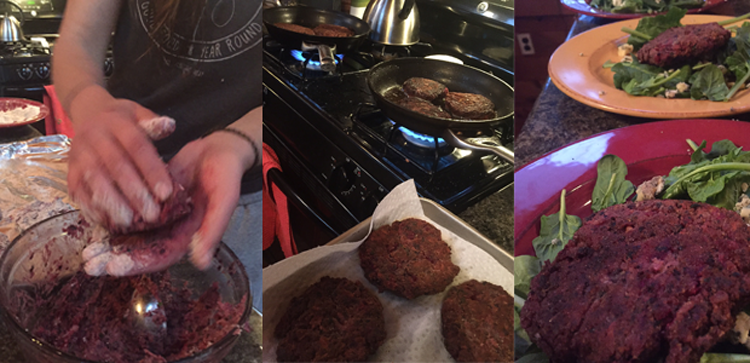
Once upon a time I dreamed of constructing a veggie burger that was strong enough to withstand the grill without crumbling to pieces. Those days are over, now I commit to the stove top and focus on FLAVOR. 

24 ounces of cooked Black Beans (2 cans)
3 Medium Size Beets (or 1 gigantor)
1/4 Cup of Flax Seed
1 Egg
1 Bunch of Green Garlic
4 Carrots

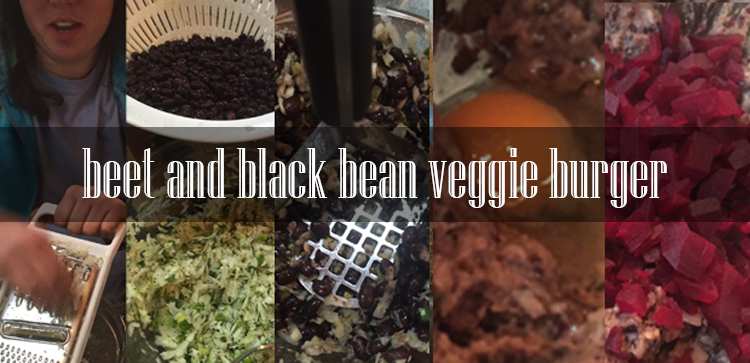
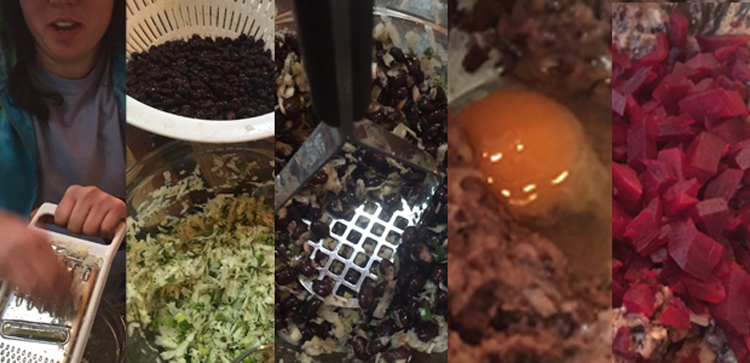
Bring a pot of water to a boil and add the beets. If you have a large beet, cut it into pieces to reduce cooking time. No need to peel. Cook until fork tender, about 30 minutes. Pour the beets into a colander. Run the beets under a trickle of cool water and the skins should slide off in your hand with gentle pressure.

While the beets are boiling grate the carrots into a large bowl. Add finely chopped green garlic. Rinse the black beans well so they are as dry as possible. Add them to the bowl and mash with a potato masher. You can also just put all 3 of these ingredients in a food processor and press GO.

You can flavor this paste with whatever you like. This week I used the juice of 1 lemon, savory, oregano, basil, and salt. After stirring well this is a great time to take a break, and taste! It's a great dip for a chip or veggie!

Add the flax seed and one egg, stir well.

Dice your cooked, peeled beets into small pieces and stir into the bean mixture. At this point add just a small amount of flour (any grain flour will do, or more flax seed if you prefer), to thicken the paste. You want it to be sticky.

Prepare a bowl of half flour and half bread crumbs. (You can sub in any grain or seed that will fry in high heat). Roll the veggie burgers into balls, flatten them, and dip them on both sides into the flour mixture. Then cook on medium high heat with canola (or other high heat) oil. Cook about 2 minutes per side, until browned and crispy.

I ate mine over a bed of spinach and blue cheese.

Comment

The Life of Winter Greens

2 Comments

The Life of Winter Greens

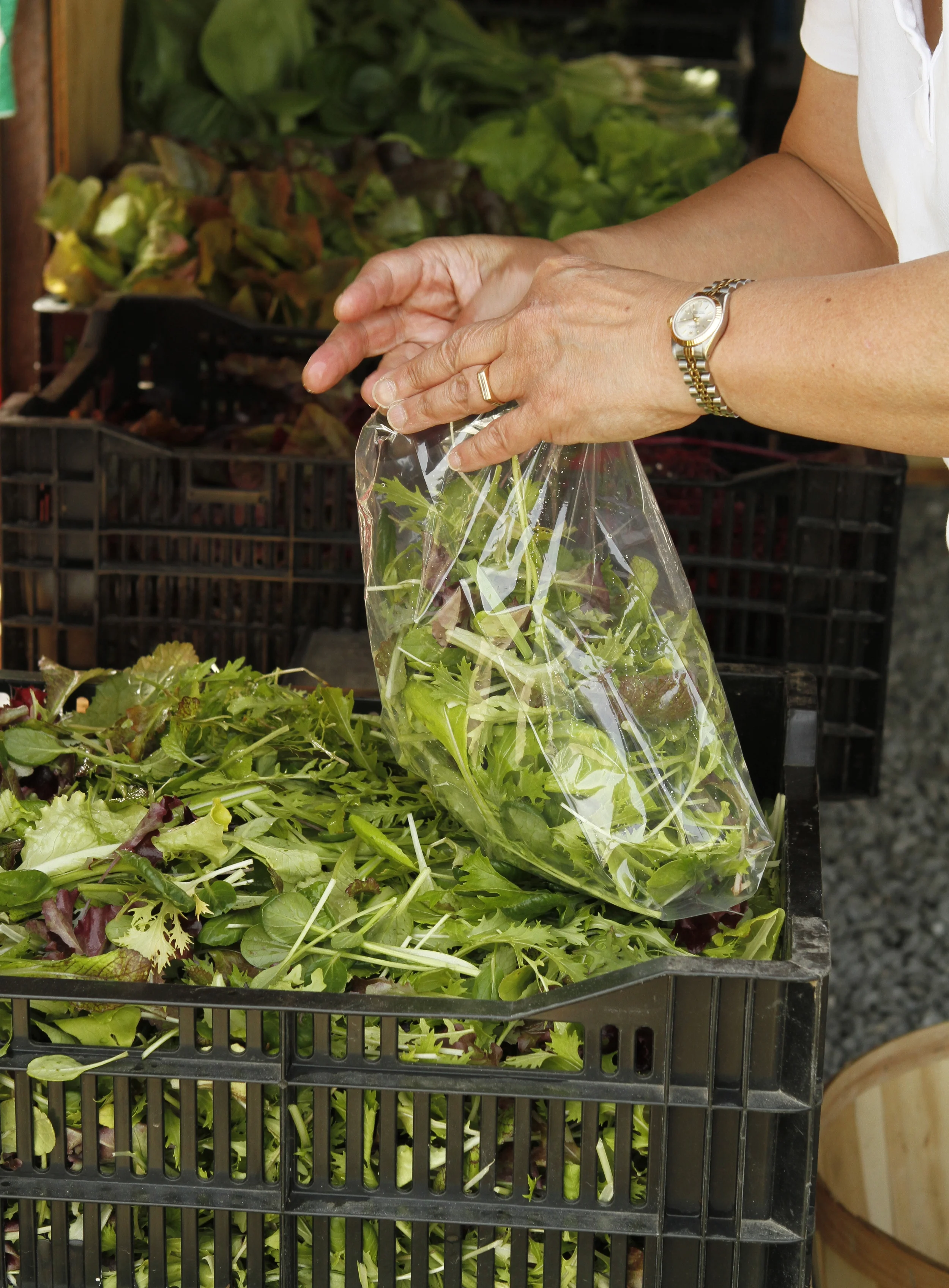
Many of our CSA members have been telling us how excited they are to have so many greens this time of year! We have been expanding our winter growing operation, and every year we are able to provide more variety of crops for a longer period of time. So how do we do it?

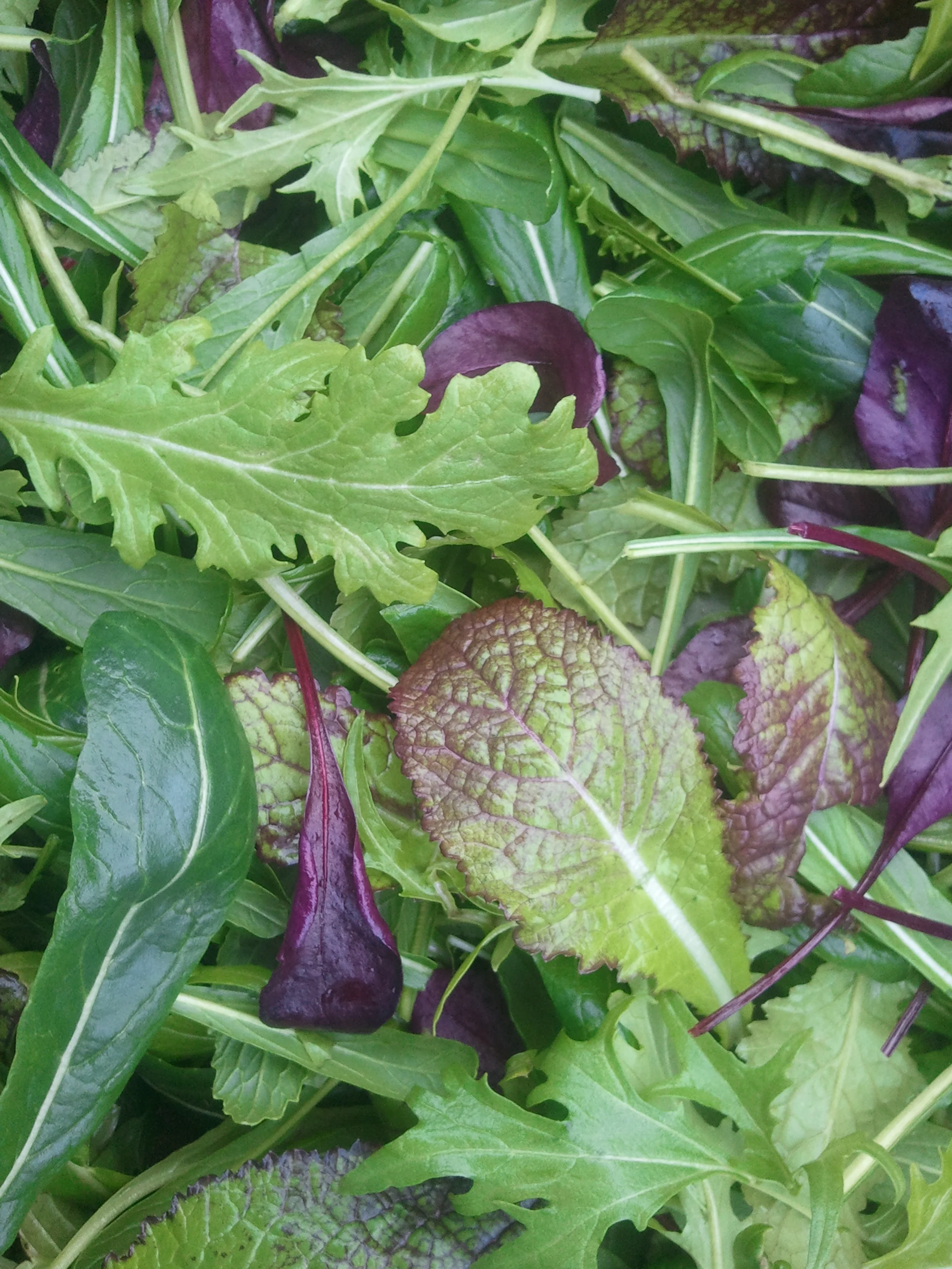
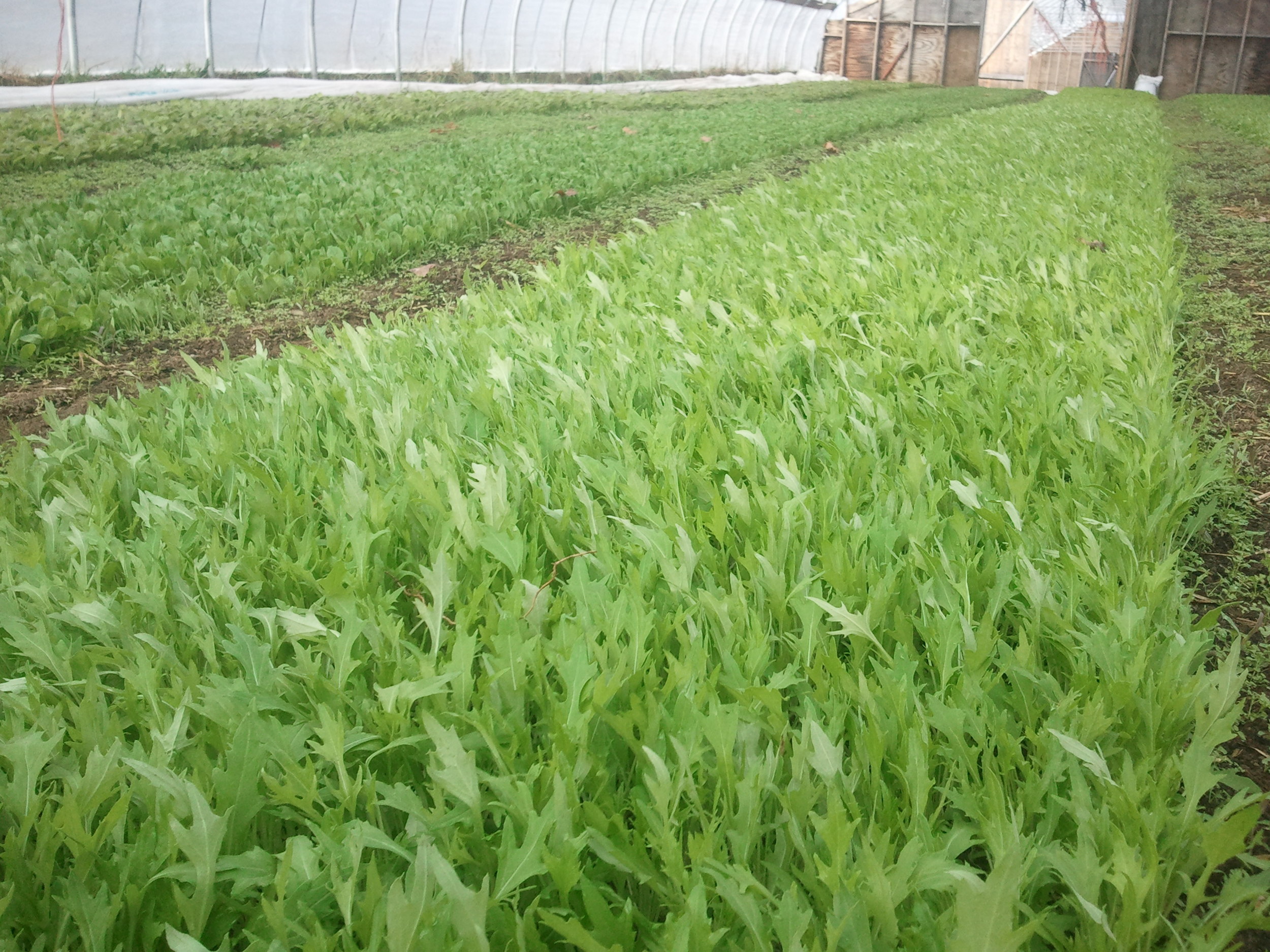
It all starts with careful planning in August, when we seed the transplants that we will eventually plant into the hoophouses in fall.  When we finally pull our tomato plants from their indoor homes in September, we then fill the hoophouses with  new transplants and seeds that will turn into crops such as mesclun, arugula, pac choi, spinach, kale, lettuce, chard and more. We allow our plants to grow until they are well-established, despite the waning daylength of fall. The short days and cool nights facilitate slow growth, but enough growth to secure a foundation of strong roots and rugged greens. The slow plant cell growth during the winter is responsible for the unbelievable sweetness and hardiness of winter-grown greens. 

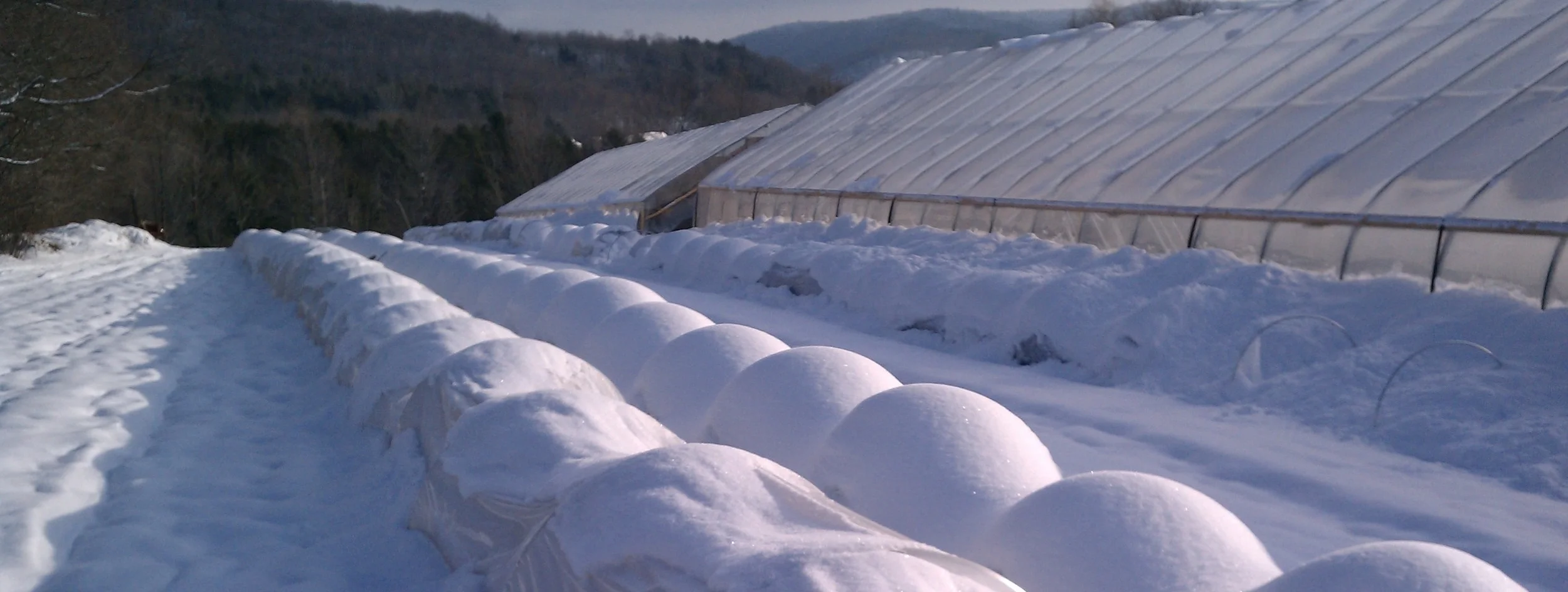
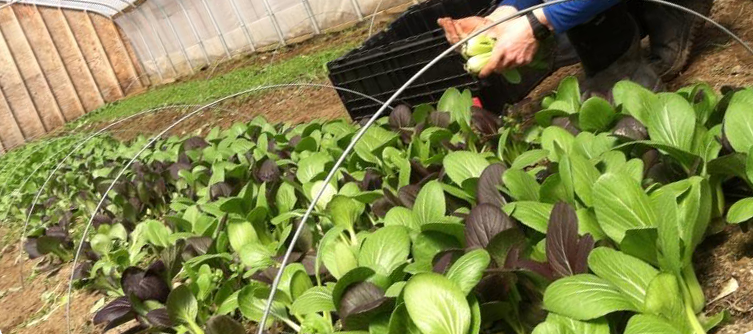
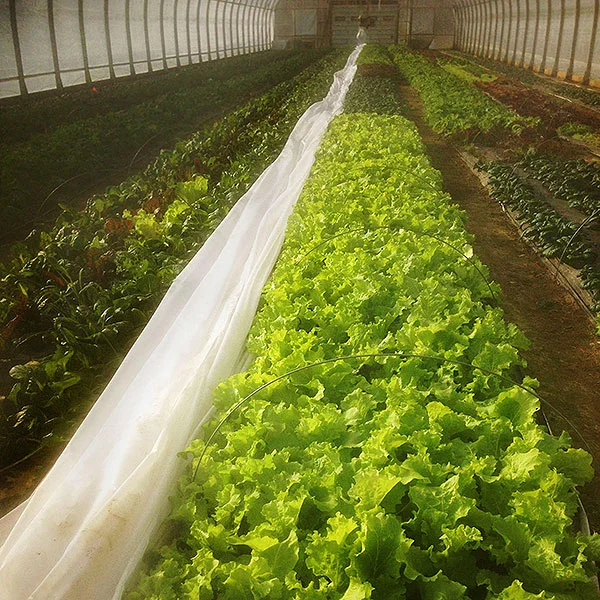
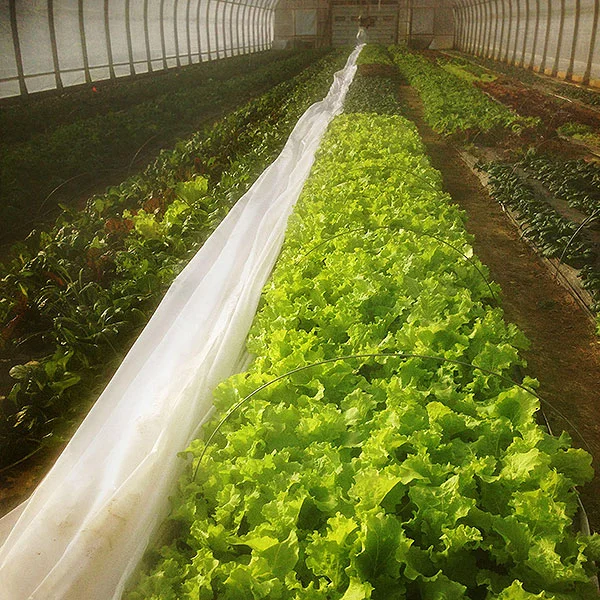
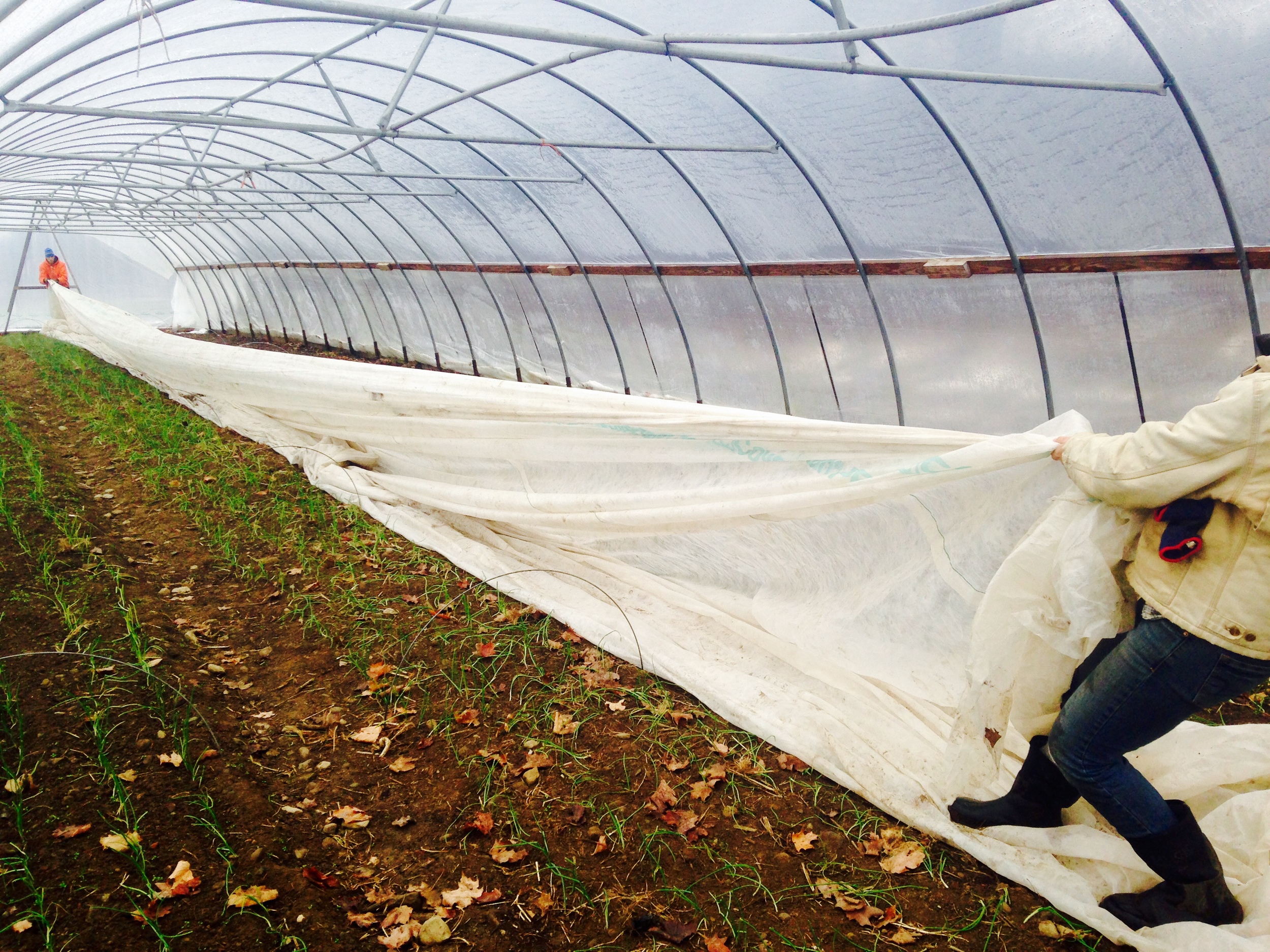
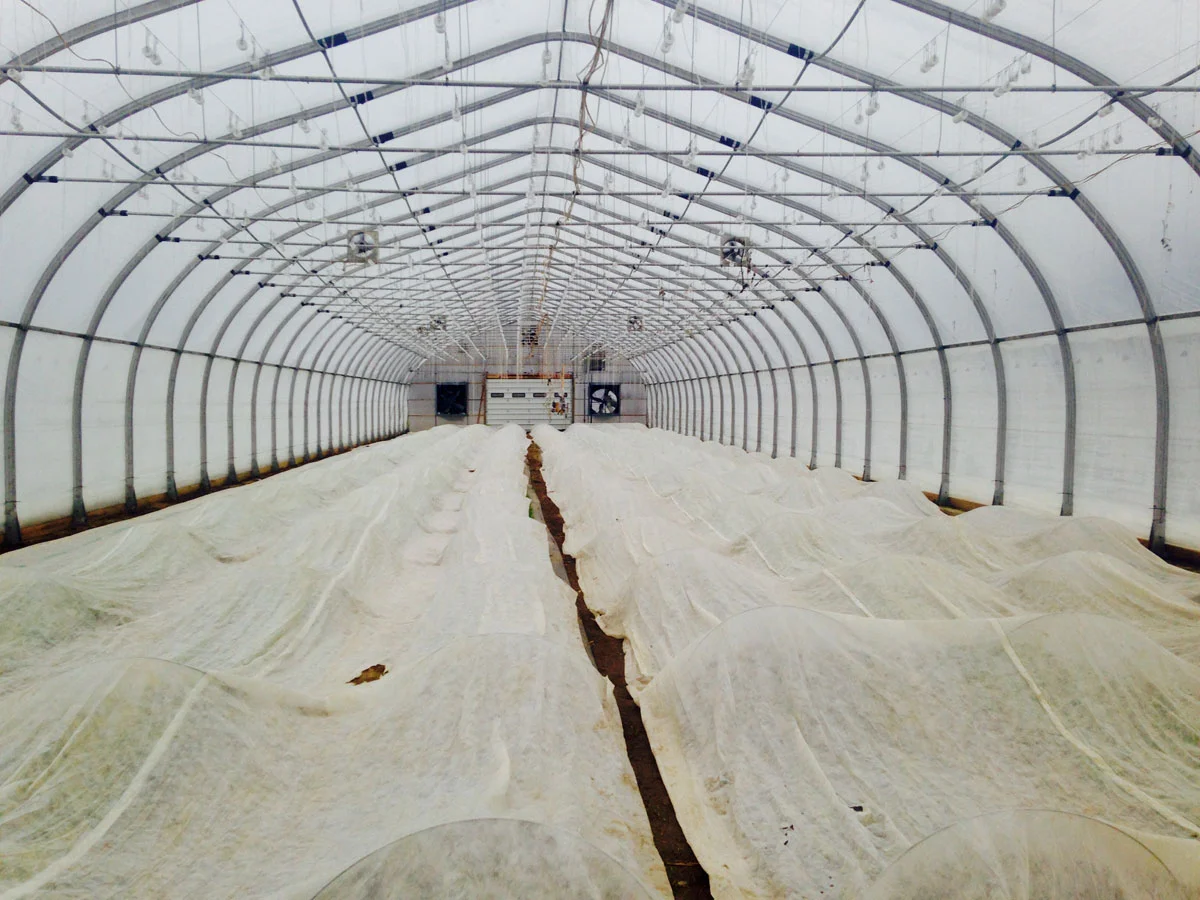
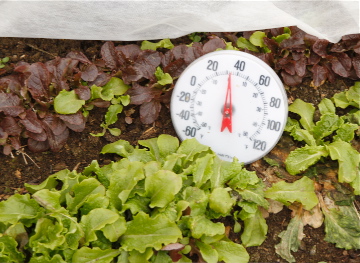
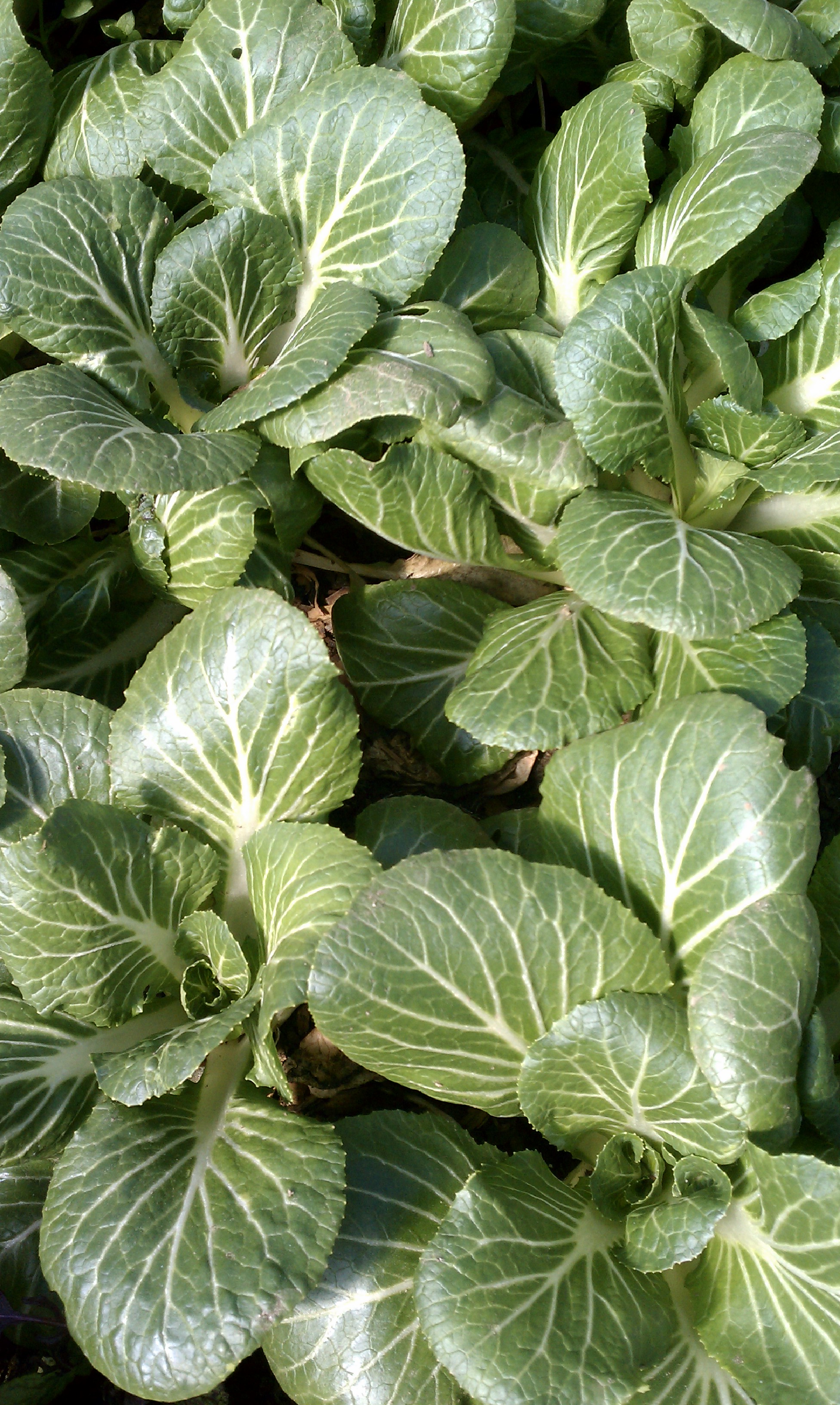
During the winter we cover our crops with “remay”, which is a long sheet of breathable fabric that is also penetrable by light. Remay prevents frost from touching the leaves, and increases the temperature of the soil beneath its cover. The hoophouses themselves get very warm when it is sunny, so we pull the fabric off during the day, and tuck the plants back in at night. This year we were able to over-winter spinach, kale, braising greens, chard, pac choi, tatsoi, green onions, and green garlic.  You might think that was only because this winter was so mild, but we overwintered all these same crops last winter too when it was significantly colder. 

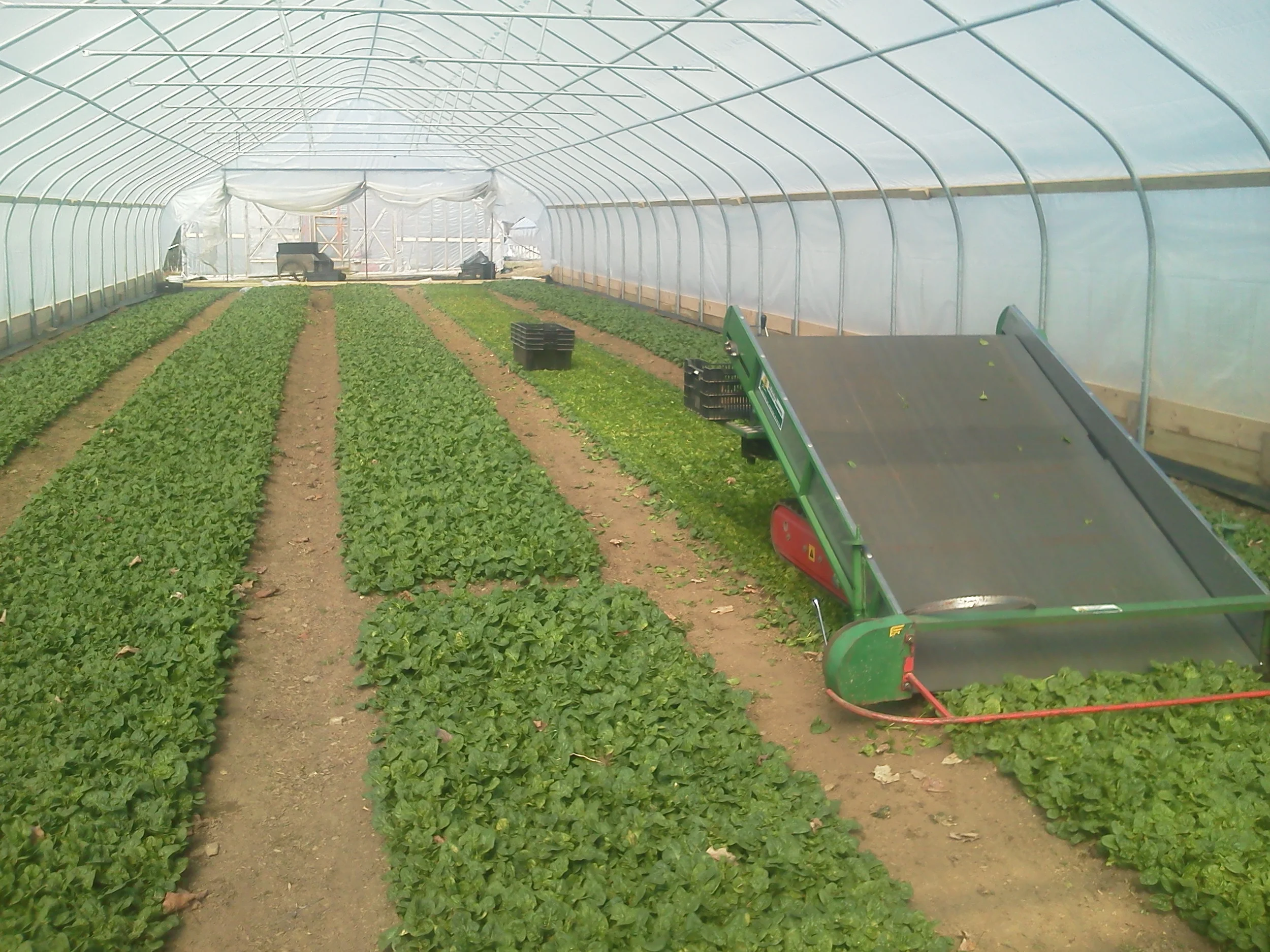
When Spring arrives, and the days lengthen, the greens start growing rapidly. We harvest them either by hand, or with our walk-behind harvester, which allows us to harvest hundreds of pounds of salad greens per hour. We then bring the greens into our wash-pack area, where we double wash and sanitize them and spin them dry in a giant 50 gallon salad spinner.  From there we put them into in our large walk-in coolers to cool them before sale.

We distribute our greens to our CSA members, our Farmstand, the Burlington Farmers Market, and numerous restaurants, groceries, hospitals and schools within 30 miles of the farm. We have nine hoophouses with nearly 40,000 square feet of growing space, allowing us to grow nearly 10000 pounds of salad greens between November and March.  

2 Comments

Comment

Spinach Dip with Root Veggie Chips

We welcomed newcomer Ian Doig to our team just before his April birthday! In honor of his day the whole team made chips and dips to share. Here is our favorite Spring Greens treat.

Spinach Dip by Diane Abruzzini

1 lb Spinach, or other greens
2 Small Yellow Onions
1 Bunch of Green Garlic
1 Pint of Ricotta Cheese

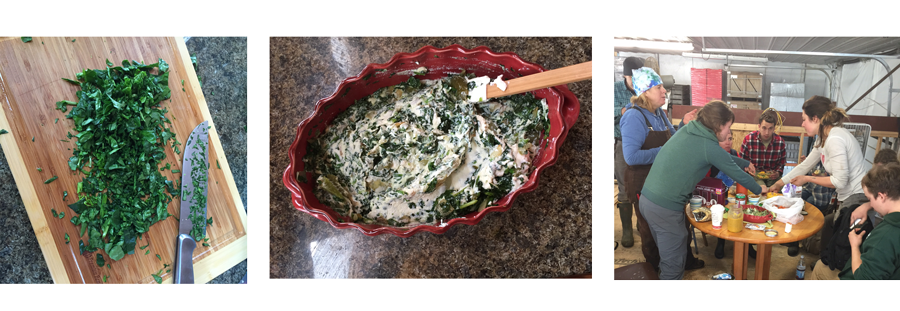
Caramelize the yellow onions in a bit of butter or oil. The onions should cook down in size, brown slightly, but not char. This should take about 30 minutes. From there add the chopped green garlic and cook for another 5 minutes, until the garlic is soft and tender. At the last minute add the Spinach.

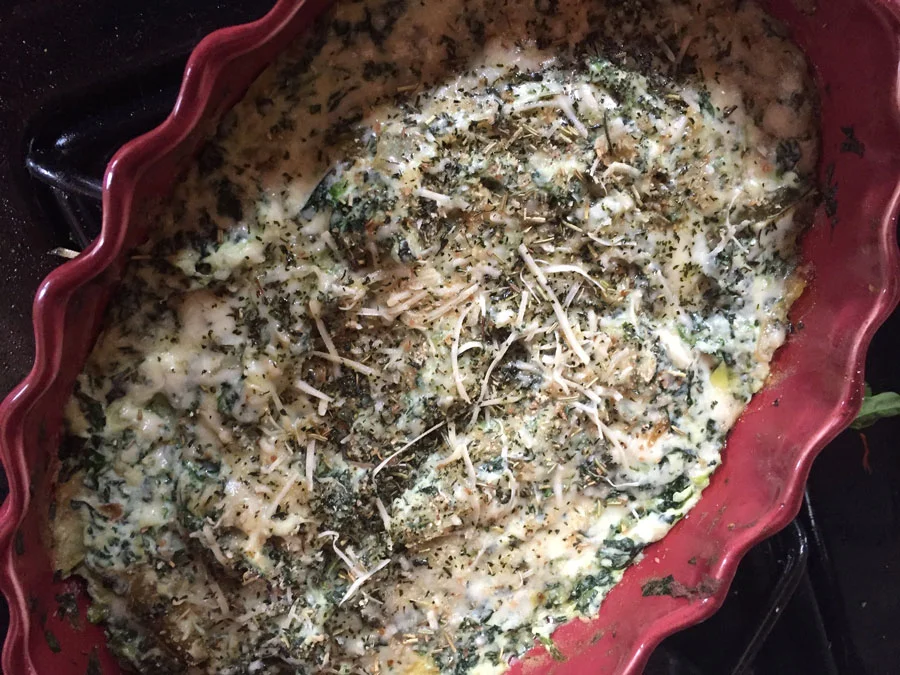
I like to leave this dip chunky. Slowly fold in the ricotta cheese with the spinach mixture. At this stage add any herbs, salt, pepper, or other flavorings you like. This week I added salt, rosemary, thyme and savory. Once the cheese is folded in you can spoon the mixture into a baking dish. Top with parmesean cheese and bake at 350 F for 15 minutes.

Root Veggie Chips

Root veggie chips don't have quite the crunch of a potato chip, but once you learn to let that go you'll find a deep love for veggie chips! If you use a mandolin slicer you will get the most crunch, but thinly sliced chips can burn quickly, so keep your eye on the oven!

Preheat the oven to 375 F

  • Slice any root veggie you like: beets, potatoes, parsnips...
  • Lay the slices in a colander or on a paper towel. Salt thoroughly and let sit for 15-20 minutes. This will help draw out excess moisture.
  • Spray a baking sheet with cooking spray or lightly oil it. Add the chips in a single layer and bake for about 20 minutes.
  • Continue this process until all of the chips are done

Try flavoring the chips with herbs or cayenne pepper before baking. Find the best flavor combination and let us know!

Comment

1 Comment

Carrot Slaw and Spinach Pesto: Spring Recipes with Juliette

Carrot Slaw is one of my favorite Spring treats, because I can mix in the sweet and spicy microgreens.

CARROT SLAW

Dressing:
3 TBSP Apple Cider Vinegar
3 TSBP Maple Syrup
3 TSBP Soy Sauce
1 tsp Sriracha or Hot Chili Sauce (add more or less depending on affinity to spice)
1 TBSP Sesame Seeds

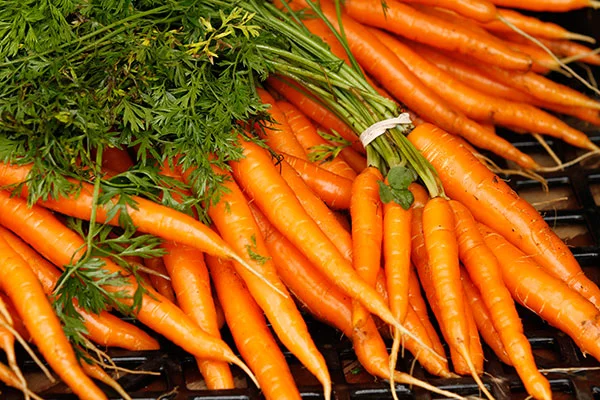
Grate, food process, or julienne 2 lbs of carrots. You can sub in other root veggies, or cabbage, based on availablity. Toss in salad dressing, and let sit in fridge for 30 minutes before serving. When ready to serve, top with microgreens!

SPINACH PESTO

My favorite way to use Spinach Pesto is spread on toast, and topped with a sunny side up JSF egg. I have found a multitude of uses for it, and have spiced it up in a million different ways. I have tossed it in pasta stir-fries, marinated and baked chicken in it, used it as a sandwich spread, and snacked on carrots dipped in it. 

SPINACH PESTO

1/2 lb, or one large bag, of Spinach
1/2 of one Onion
2 Cloves Garlic
1/2 tsp Red Pepper Flakes
1/2 tsp Salt
1/2 tsp Pepper
1/4 Walnuts
Olive Oil

Sautee on low the half onion, salt, and pepper, in enough olive oil to coat the pan. For the best pesto flavor, you will want to caramelize the onion, which will take about 30 minutes. The onions should become transluscent, and then slightly browned, but not burnt, so keep stirring!

About 5-10 minutes before the onions are done, add the chopped garlic and red pepper flakes.

Put spinach and walnuts in the food processer or blender. Add the onion and oil mixture, and pulse until the oil is distributed. The mixture should be chunky. at this point, slowly continue to add fresh olive oil until you reach the consistency that works best for you. I like to keep mine fairly chunky, because I like to spread it on toast. When I use it as a pasta sauce or a dip, I use enough oil to be able to drip the pesto off of a spoon.

1 Comment

1 Comment

Juliette Gives a Greenhouse Tour

Thanks to an in depth tour from Juliette, our Greenhouse Manager, we have been able to summarize the exciting happenings from the hottest spot on the farm!

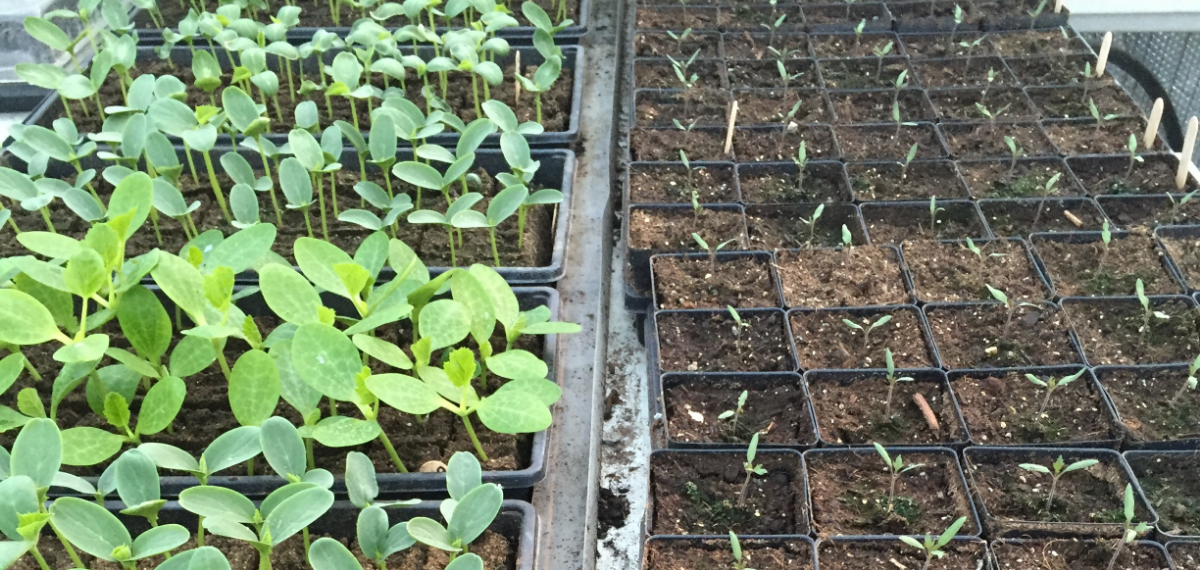
Cucumbers on the left, and Tomatoes on the right

Cucumbers on the left, and Tomatoes on the right

What’s ready to get planted? Head lettuce, pac choi, kale, chard, and cilantro are headed straight for the hoophouses.

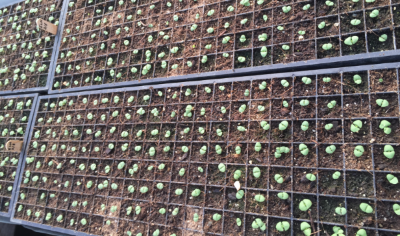
What’s popping up? 6000 basil plants have just germinated!

What’s ready to sprout? 150 trays of onions have been seeded, and will eventually head out to the fields.

Basil Starts

Basil Starts

Over the years, improvements to our infrastructure (including two new hoop houses with in-ground heating) have allowed us to start warm weather crops earlier than ever! This enables us to bring tomatoes, cucumbers, basil, and zucchini to our CSA members earlier than ever. We start transplanting the first tomatoes and cucumbers next week.

So what greenhouse toys does Juliette get to play with?

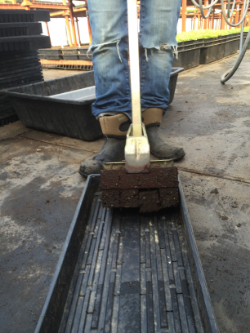
Soil Blocks - Soil blocks are created by pushing wet potting soil into a mold, similar to one you would use to build a sand castle. When plant roots grow to the edge of the soil block, they reach air instead of plastic and thus stay poised at the edge of the block. This decreases root damage during planting, significantly reducing transplant shock. 

Soil Blocking

Soil Blocking

Heat Mats – Our heat mats allow us to set specific soil temperatures for our warm weather crops to germinate. While many established plants such as tomatoes and cucumbers do OK with temperatures in the 60s, they require soil temperatures of around 75 degrees or more to germinate. Once our starts have sprouted, they are moved to another part of the greenhouse, so more plants can have their chance on the heat mats.

Recirculation Irrigation – A number of years ago we built an irrigation system that bottom-waters our trays of seedlings and uses recycled water. A pump sitting in a large tank full of water propels that water through piping that runs along the greenhouse and up to each table. These pipes can be opened to gently release water onto custom-built table tops. The water slowly seeps past all of the trays on the tables, and eventually flows to a gutter which drains back to the original tank.

This system not only allows us to conserve water, but it also allows us to grow healthier plants by giving them tempered (warmed) water instead of shockingly cold water, and by reducing overhead watering which wets the foliage. Many plants are susceptible to fungi or bacteria when their foliage gets wet. Tomatoes are a prime example of this – which is also why we grow tomatoes in hoophouses with drip (on the soil) irrigation instead of overhead irrigation, as well as keep them well pruned and trellised.

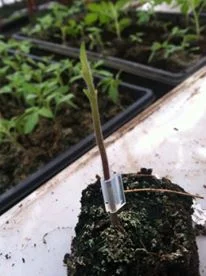
Humidity Chamber – Juliette has started some tomato plants, and in another week, she will start grafting them. Grafting is a technique where we combine a tomato plant whose fruit we love with a tomato plant that is disease resistant. These vigorously growing disease resistant plants take over the roots of the plants, or root stock, while the fruit will still be the flavor, size, and color of our fruit stock.

A Freshly Grafted Tomato Plant

A Freshly Grafted Tomato Plant

When we graft we literally cut the plants with a razor and attach them together with silicone clips. In order for the two plants to bond and become one they both need to be kept very moist. However, as we all know, when we have a cut our number one job is to stop it from getting infected. So we can’t water the plants for a few days because we want to keep the wounds clean, but we have to keep them wet. To address this we use a combination of humidity domes and a humidity chamber. The plastic domes retain moist air around the plants long enough to allow the plants to bond!

1 Comment

A New Season is Coming...

1 Comment

A New Season is Coming...


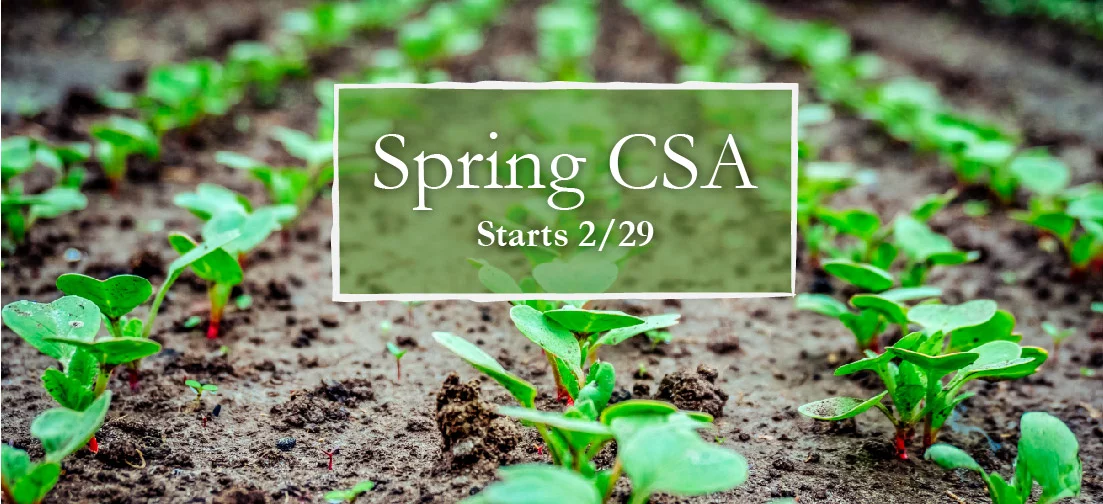
The first pickups for our Spring and Year-Round CSA programs are Monday 2/29, Tuesday 3/1, and Wednesday 3/2!

Our Spring Share is known for the wide variety of early season fresh organic vegetables the we can grow, including: spinach, mesclun, microgreens, lettuce, scallions, radishes, green garlic, sweet onions, spring dug parsnips, carrots, new potatoes, and the season's first cucumbers and summer squash, plus much more! There are two share sizes available and 9 pickup sites to choose from! Round out your local eating with our Settlers Meat Medley, Chicken, Wild Alaskan Salmon, and Settlervore Shares (eggs, bread, cheese and more). 

Learn More

1 Comment

Growing Garlic

1 Comment

Growing Garlic

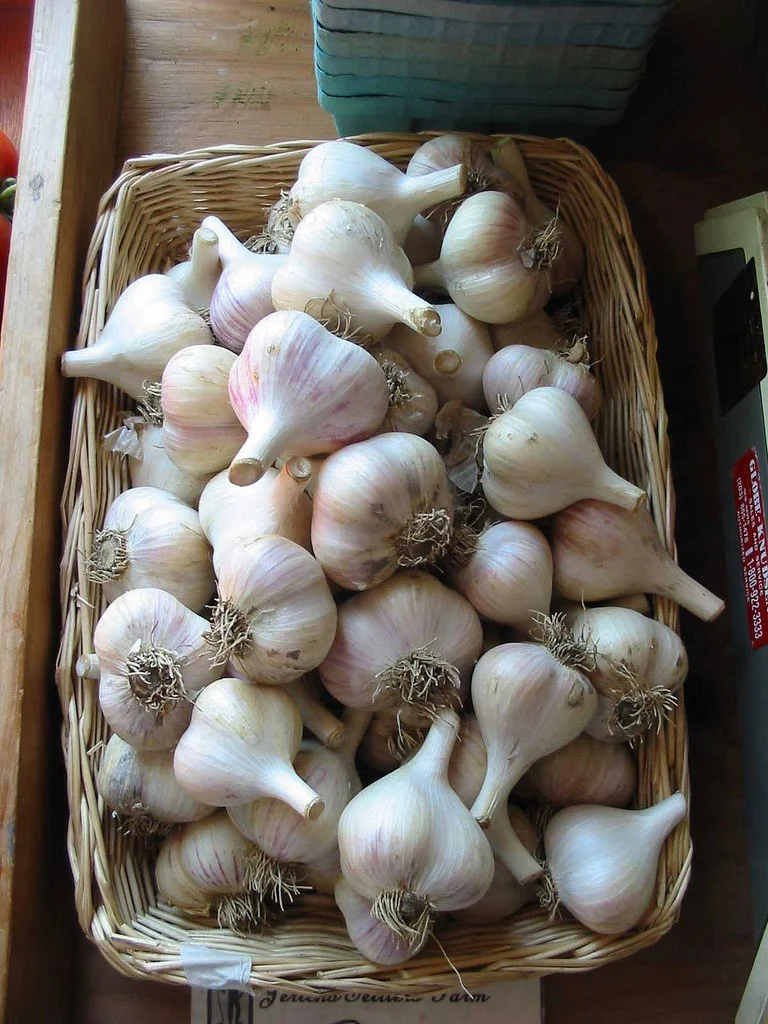
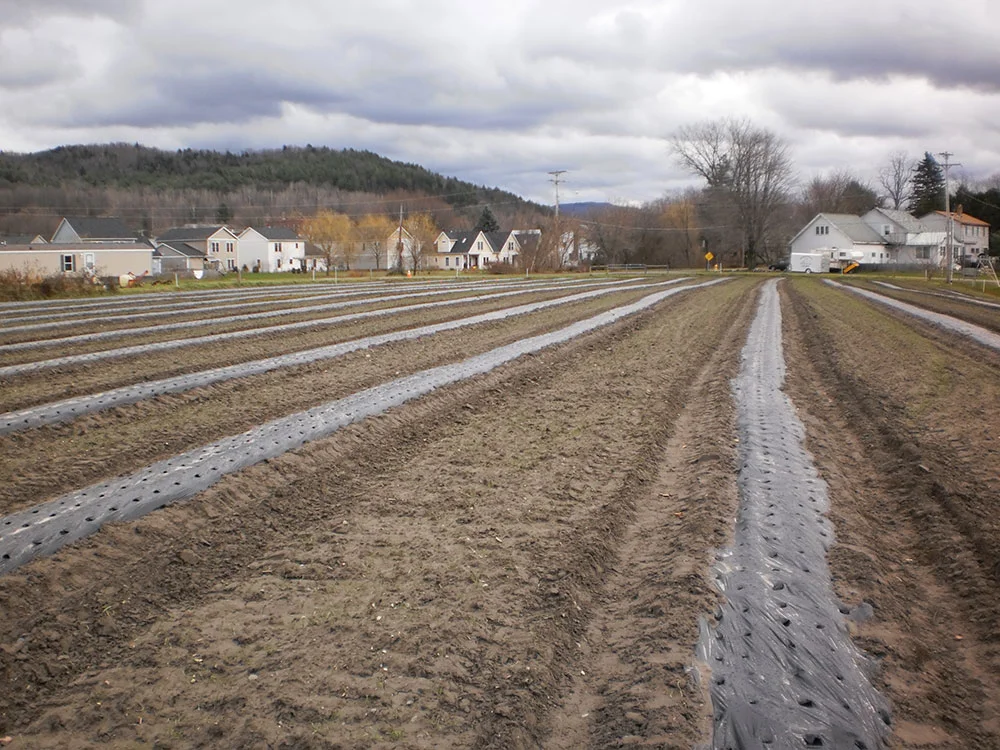
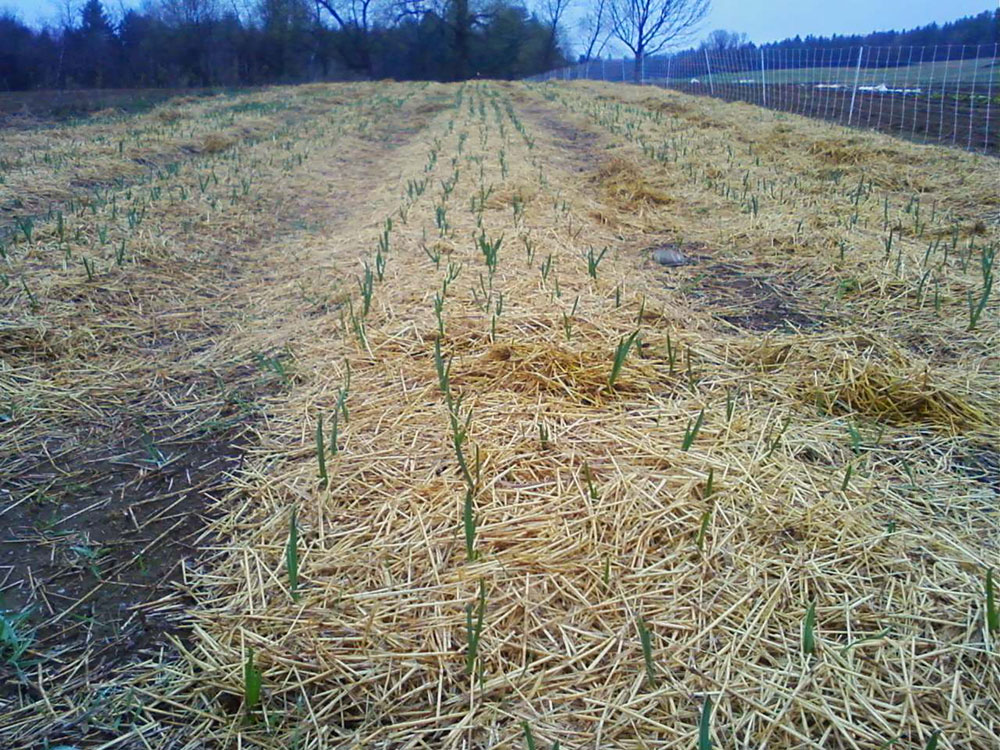
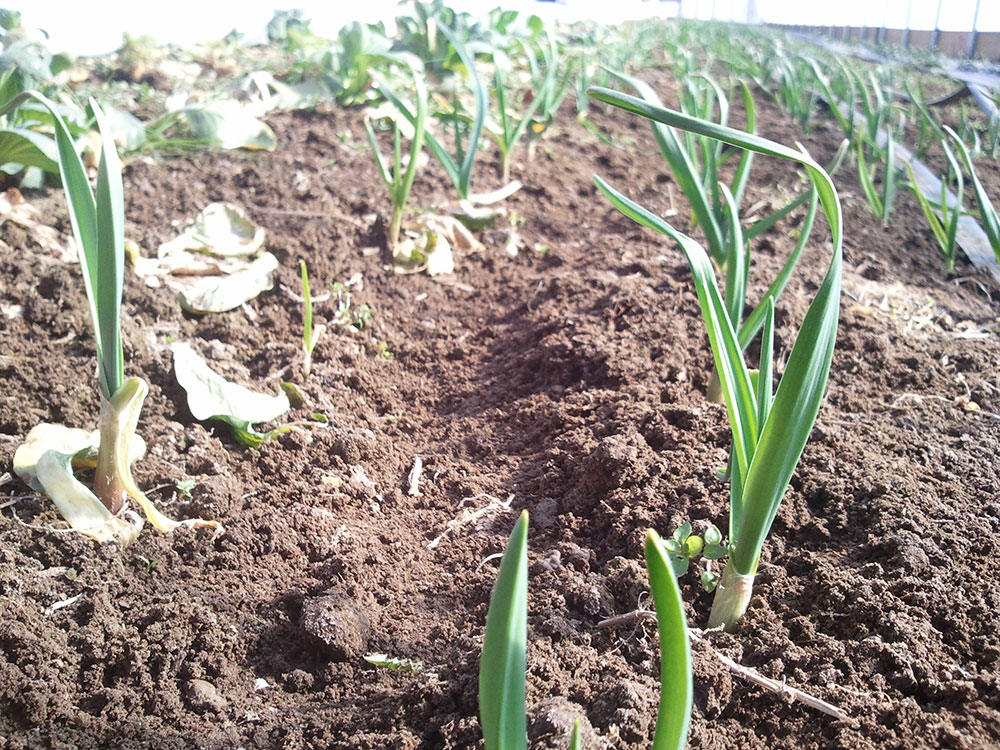
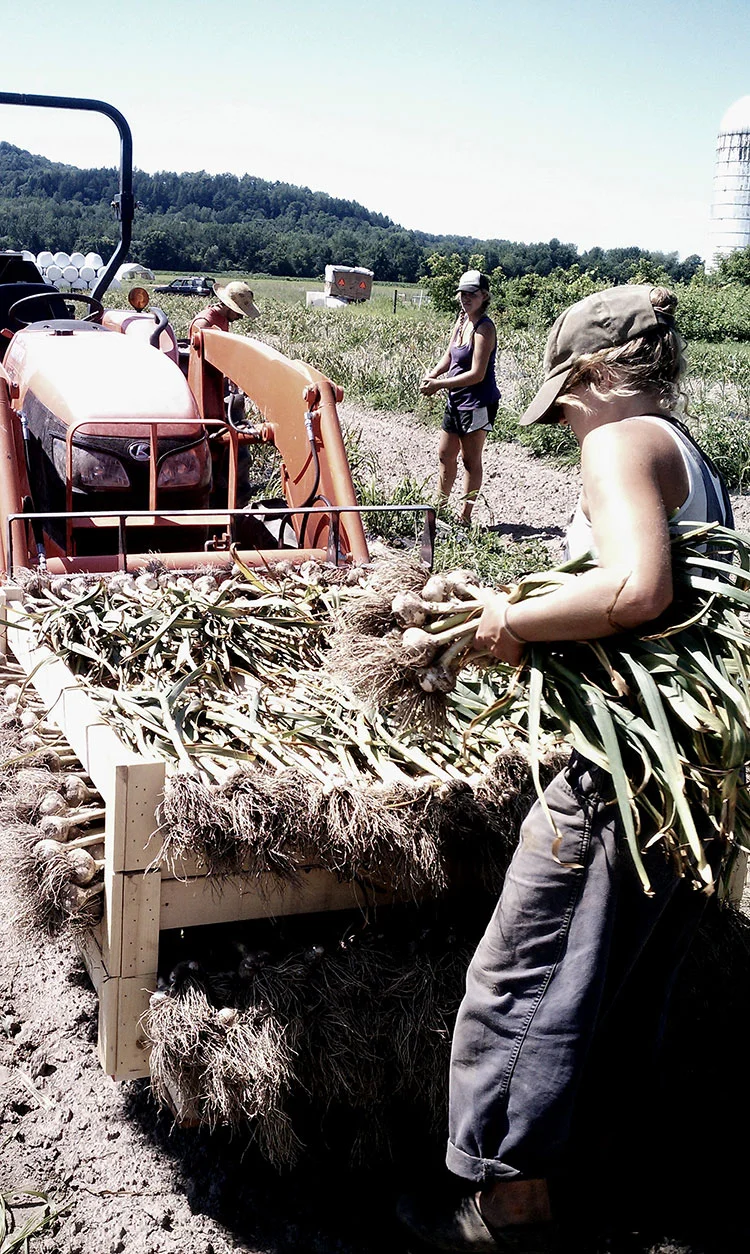
One of our favorite fall tasks is to plant garlic, which we do each November just before the ground begins to freeze. The goal is to get 8000 garlic cloves in the ground in time for them to set roots, but not too early so they don’t send up a green shoot until next spring. The JSF crew has been hard at work for the last two weeks and the cloves are snug in the soil until next spring, when they’ll be one of the first crops to break ground with their green shoots – sometimes even pushing through the lingering April snow cover.
 
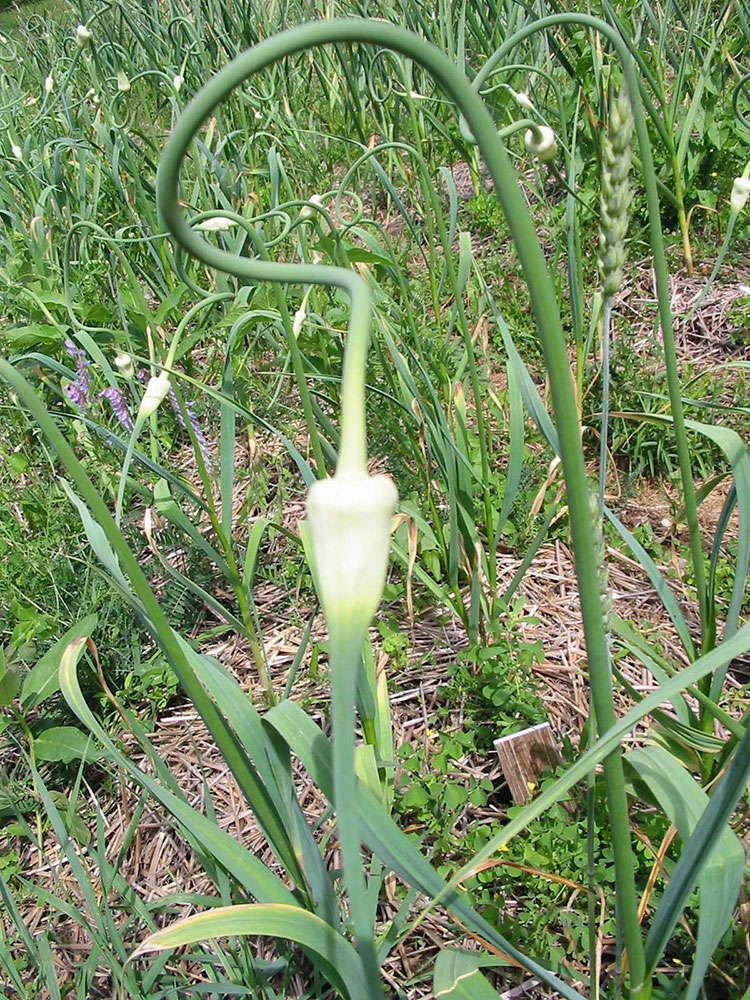
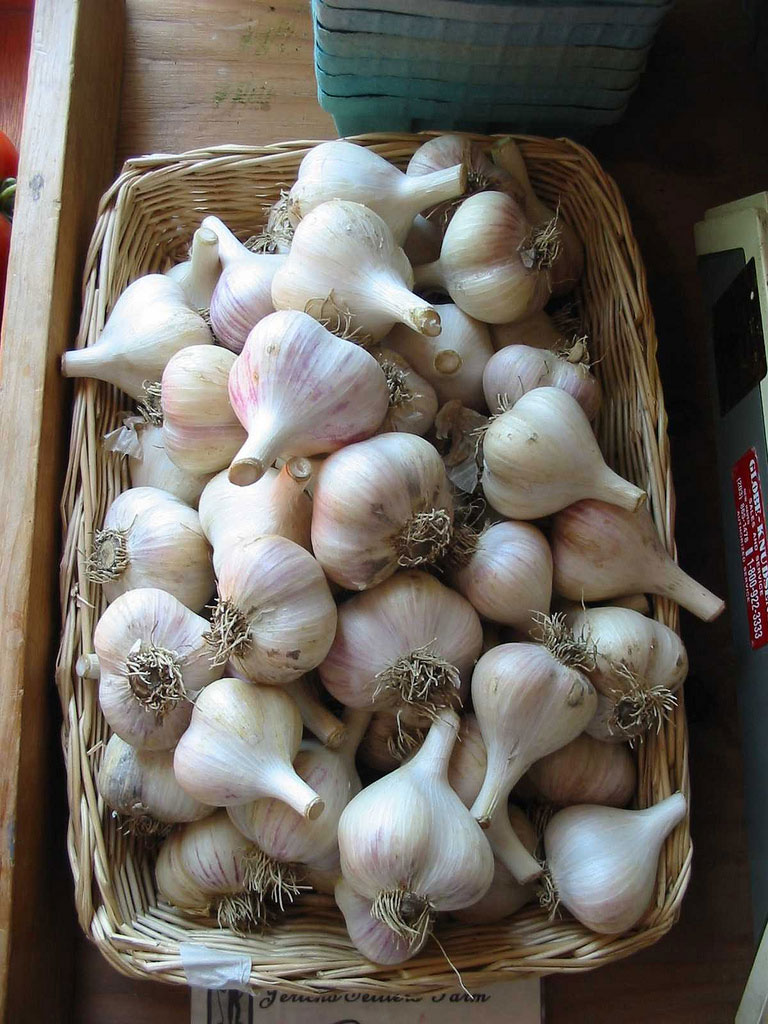
Garlic is a member of the Allium genus (along with chives, onions, leeks and scallions). At JSF we grow several hardneck varieties as they tend to do best through Vermont’s hard winters. French Rocambole and Russian Red Rocambole are two we grow for their intense strong flavor and easy peeling qualities. Hardneck garlics have one row of cloves surrounding a prominent stem, which is called a scape. Each summer when the scape emerges and sends up a tall stalk from the middle of the plant we cut them off so the plant puts its energy into making a big garlic bulb underground, rather than growing the scape into a flower. Scapes themselves are a tasty part of the garlic plant and can be grilled, sautéed, or added to pesto.  We also grow a softneck variety called Nootka Rose, as softneck varieties store for a long time through the winter, allowing us to eat garlic well into April. 
 
Try this easy roasted garlic recipe  – one of the best ways to eat garlic. Enjoy!


1 Comment

High Tunnel Greens

Comment

High Tunnel Greens

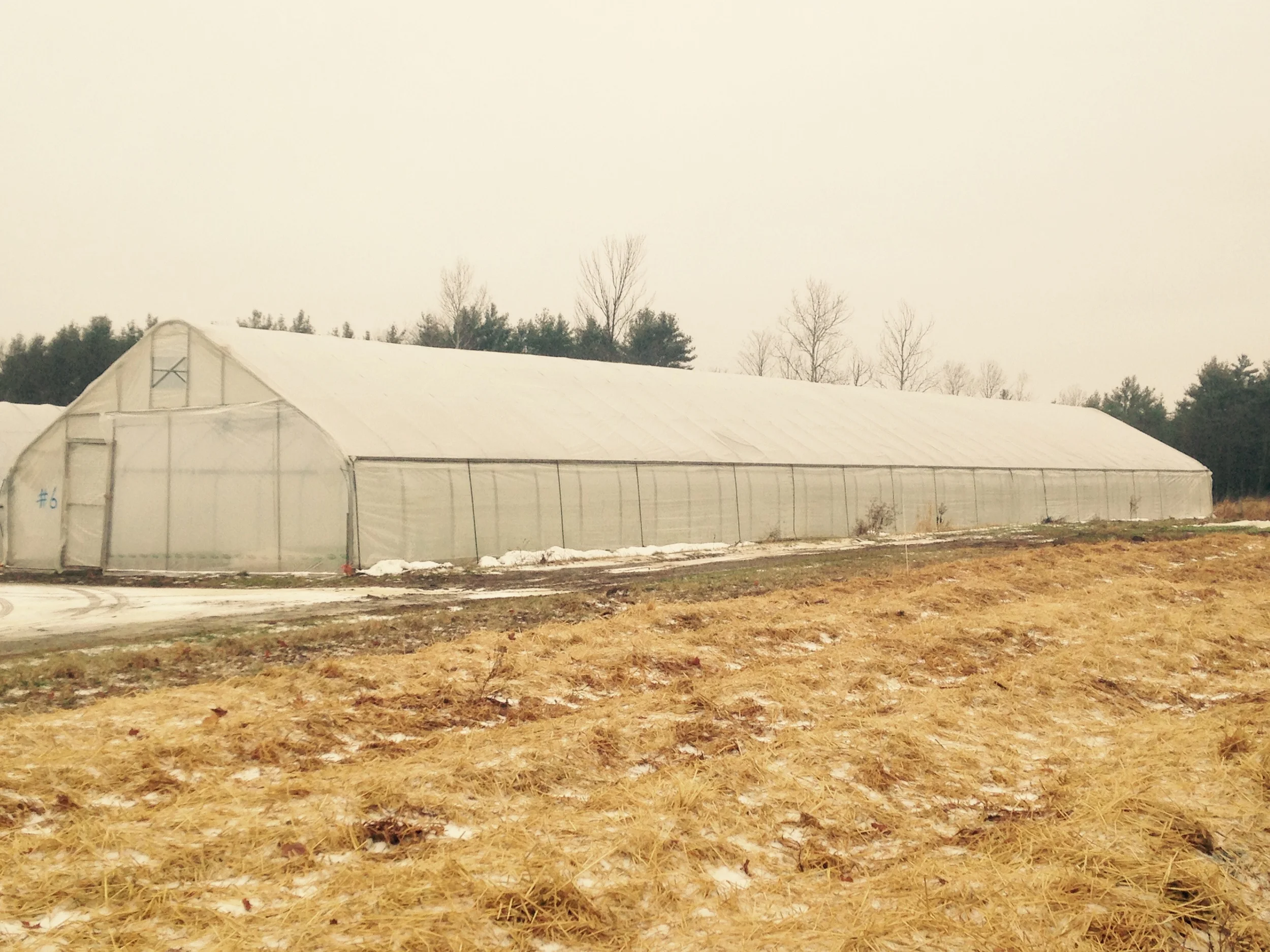
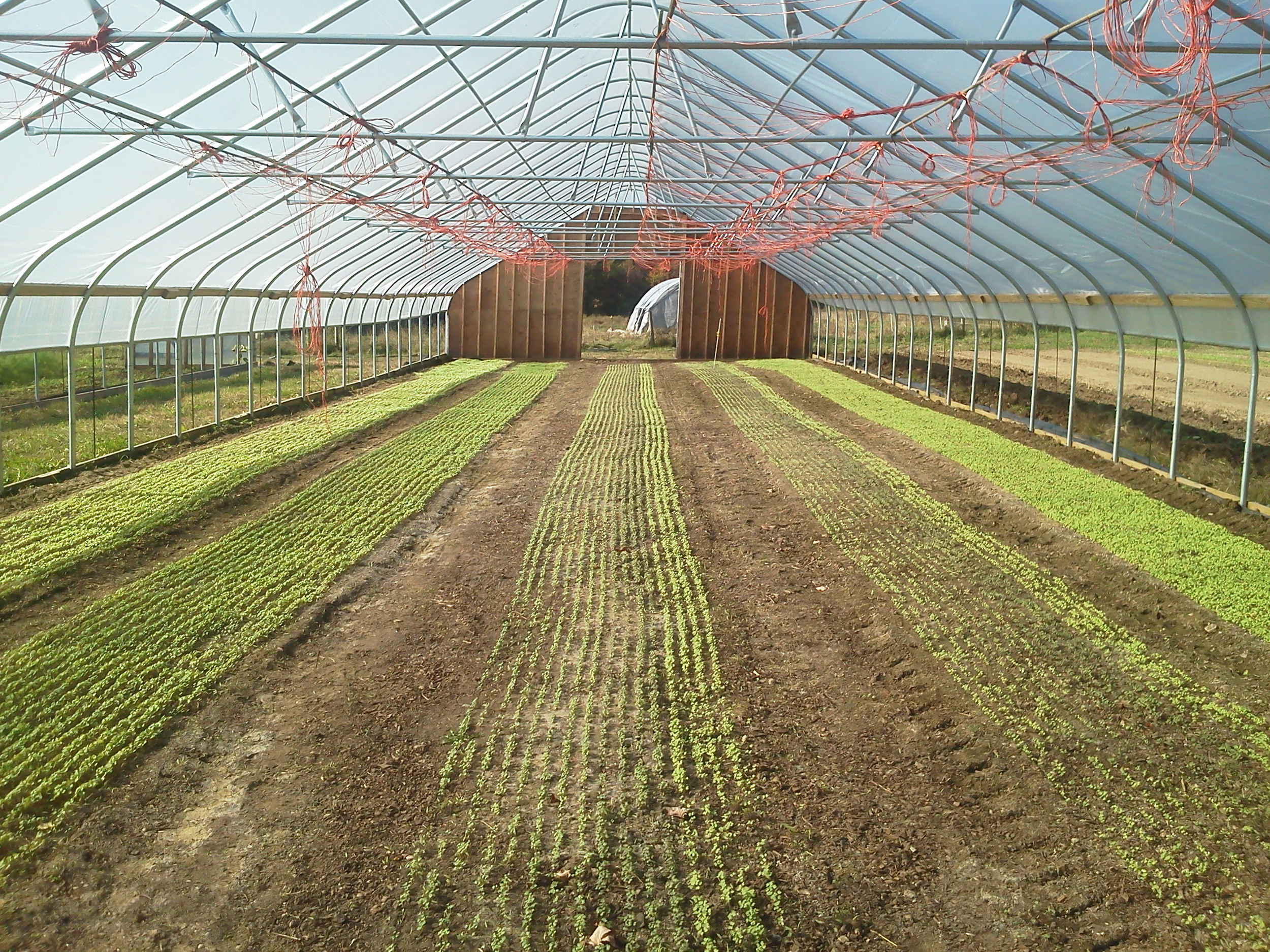
It’s easy to take the abundance of luscious greens coming out of the field for granted during the summer, but where do they come from this time of year? The answer is high tunnels. High tunnels are basically greenhouses in which we grow plants directly in the soil. The steel frames are covered with one or two layers of thick plastic and are warmed by passive solar heating. Two of our newest high tunnels here at Jericho Settlers Farm also have in-ground heat supplied by a biomass furnace to keep the greens happy during the coldest winter months. We have nine high tunnels at JSF and thanks to them we can grow fresh salad greens for you all winter here in Vermont.

A lot of farming has to do with timing, and seeding in high tunnels is no exception. During the summer months greens are ready to harvest roughly 20 days from seeding. But when the days start to shorten it can take up to 40 days or more to reach maturity. Seeding just a few days late can make a huge difference in the number of harvests we yield. We seed our high tunnels in late September and early October when there are still more than 10 hours of daylight for optimal germination and plant growth.

Two other important factors involved in winter growing are temperature and moisture. Both need to be monitored closely throughout the winter to ensure that the greens ending up in your salad are fresh and healthy. The plastic that covers our houses helps to trap heat from the sun, which warms the ground and aids plant growth. If it’s warm enough, we open the doors and roll up the sides of the house, which allows for airflow through the houses.  On a sunny November day when it's 25 F outside it can be well over 50 F inside a high tunnel if we don't ventilate them.  Keeping the plants cool (but not frozen) in the early winter helps them to harden off and be ready for deep winter, plus ventilating prevents dangerous moisture build up in the high tunnels - a precursor to fungal growth which can ruin a crop of winter greens. As the evening approaches and temperatures drop we close up the tunnels and use a lightweight cloth cover, called remay, to blanket over the vulnerable plants. By covering the salad greens and other veggies in our high tunnels we are able to trap heat from the day closer to the ground around the plants. In the morning, we're back out there again to remove the remay, ventilate the crops, and allow the sunlight to penetrate through the house to reheat the ground. Then we recover the crops in the afternoon and do it all over again the next day.

Come late December however, the combination of below freezing temperatures and short day length halts most plant growth.  By this time we have harvested most of the salad greens in the unheated high tunnels and they will not regrow again until the longer sunny days of February come around.  So this is when our new in-ground heated tunnel comes into real action!  By maintaining minimal ground heat (with a biomass furnace) that keeps the plants just above freezing the plants are able to continue a small amount of growth even during the shortest coldest days of winter.  This allows us to continue to harvest fresh salad greens through January and February.

We enjoy the change in work and growing challenges that comes along with growing during all the different seasons, even the snowy one!

Comment

Comment

Too Much Cabbage?

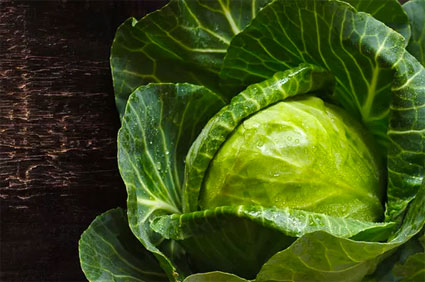
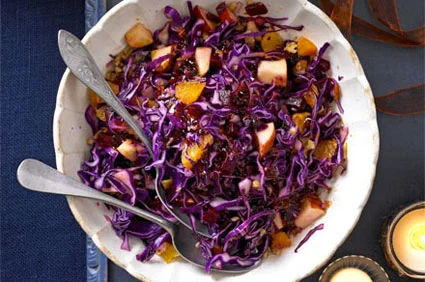
We all lack cooking inspiration at one time or another, and the deep winter in Vermont certainly can present a challenge. Storage crops like beets and potatoes slowly become mundane on the dinner table. Even though these versatile, nutrient dense vegetables nourish us throughout the long winter months, we start to overlook their potential. Lately it seems like cabbage is at the top of the ‘had enough’ list. Our poor beautiful purple and green cabbage are falling prey to culinary boredom. But no more!

A little backstory for starters. Cabbage is grown annually for its densely leaved heads of eye popping purple and green. It is part of the brassica family, also referred to as a cruciferous vegetable. It has such cousins as broccoli, horseradish, cauliflower, turnips, kale and brussel sprouts to name a few. All of these and many other vegetables belonging to the same family are descendants of a non heading wild field cabbage thought to be more similar to what we think of as kale. As it evolved its popularity was partly do to its versatility, however its ability to thrive during the short northern growing seasons truly helped it become a mainstay in diets throughout the ages. 

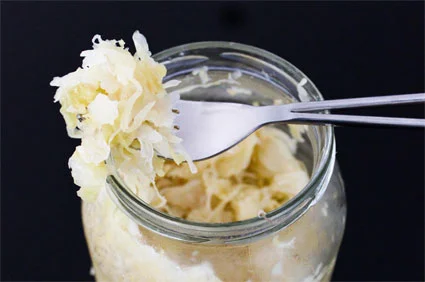
Cabbage being the humble vegetable that it is, has been a food and medicinal staple throughout history in many different cultures. Roman soldiers carried cabbage for a food sources but also used the leaves on wounds. Ancient Greeks advise eating cabbage before a night of drinking and again in the morning to help with any residual hangover. Early sea explores carried cabbage on board their ships to prevent the crew from scurvy. In modern times we still enjoy many dishes that have long histories, think sauerkraut and coleslaw. Over time human selection has given way to the dense heads we grow today.

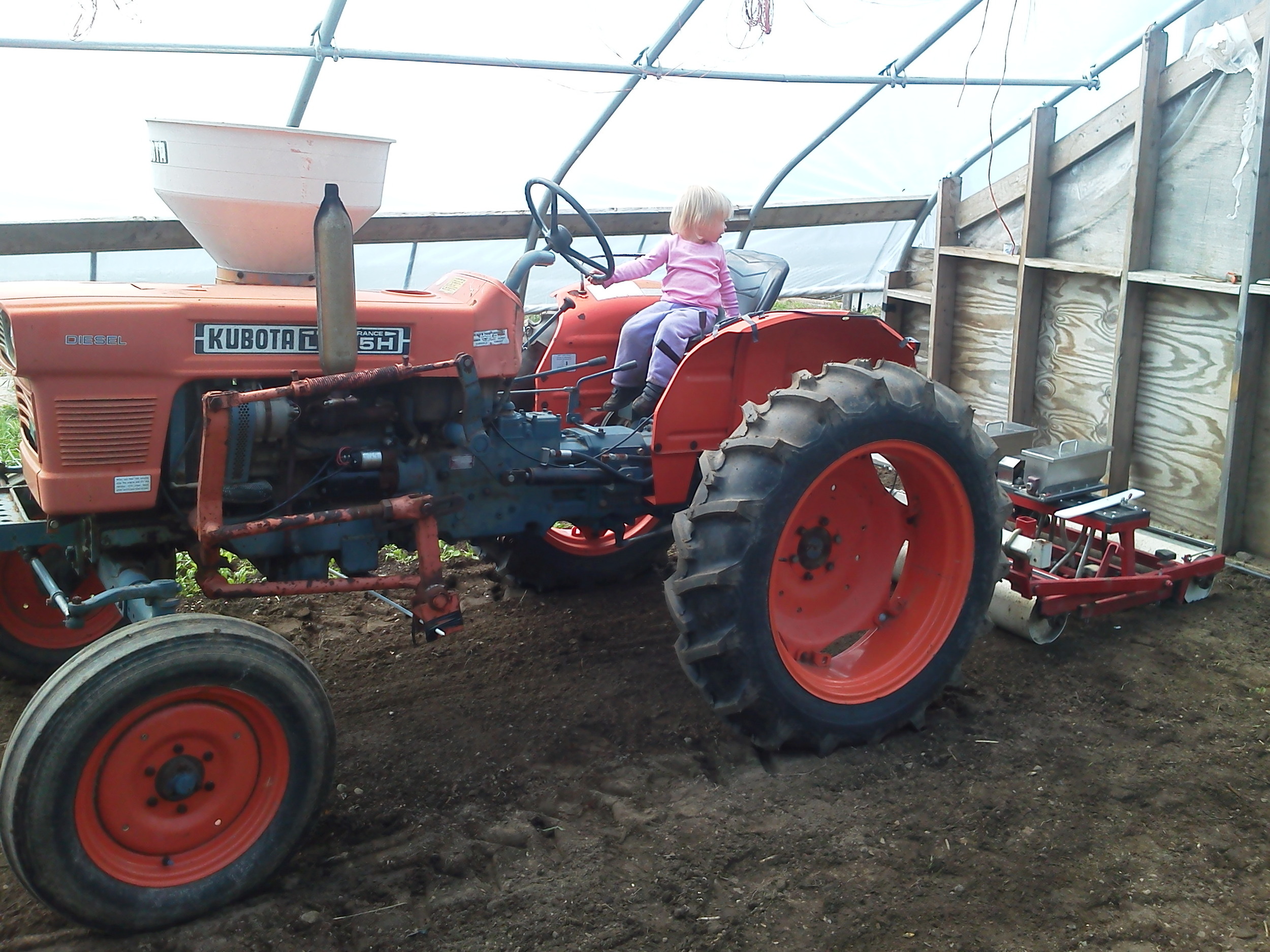
While there are different varieties of cabbage, we grow a large crop of smooth-leaved heads that are known for their storage quality. In late spring we plant tray after tray of transplants that we have started in the greenhouse from seed. We wait for growth then we weed around the plants, then wait for more growth, and weed some more, all while watching for signs of nutrient deficiencies, plant pests, and diseases. While we do grow some early varieties of cabbage for summer enjoyment, the winter storage cabbage takes about 120 days to reach maturity for harvest. Just like our other bulk crops we harvest cabbage all at once over the course of a few days. Cabbage harvest is a crew favorite for sure. Who doesn’t love tossing cabbage and driving tractors?

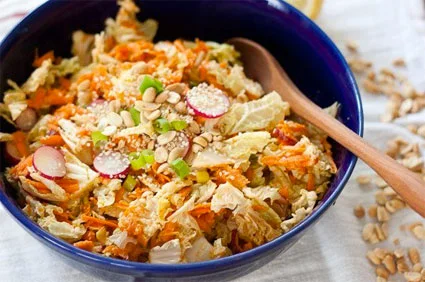
Are you warming back up to cabbage yet? Check out the links in the sidebar for ideas and recipes. Hopefully you’ll find a few ideas that will help cabbage back into your good graces and onto the dinner table.


Comment

2 Comments

Recipe: Homemade Pumpkin Pie

If you've never made a pumpkin pie from scratch, now's a great time to try. Making fresh pumpkin puree from a sugar pie pumpkin is extremely easy and will really make your pie stand out! This recipe is from Christa's mom, Emilie Alexander, and it's incredible!  One pumpkin will yield about  3 cups of puree, enough for two pies - one for dessert and one for breakfast the next day.

Ingredients:

1 pie pumpkin, cooked and pureed following directions below

For 1 pie (double for 2 pies): 
1 1/2 cups pumpkin puree
1 single crust (see sidebar for a great crust recipe)
3/4 cup maple syrup (or sugar or honey)
1 tsp cinnamon
1/2 tsp ginger
1/2 tsp nutmeg
1/2 tsp salt
3 eggs
1 1/2 cups evaporated milk
1 Tbsp butter, melted

Method:

To make the pumpkin puree: Wash the pumpkin, cut it in half and scoop out the seeds and stringy inner flesh.  Roast the two pumpkin halves in a baking dish lined with foil (cut side down) at 400 degrees for 50 minutes, or until flesh is tender when poked with a fork. When cool, scoop out the flesh and puree in a food processor. You can do this step ahead of time and refrigerate or freeze puree for later use.
To make the pie: Preheat oven to 450 degrees. Put the pumpkin puree in a mixing bowl and stir in maple syrup, spices, and salt.  Beat eggs slightly in a separate bowl and add the evaporated milk.  Combine with pumpkin mixture until well blended.  Stir in the melted butter. Pour into the pie crust and bake for 10 minutes, then turn heat down to 350 degrees and bake for 35 minutes. Remove from oven and let cool fully before serving. Pumpkin pie can be made well ahead of time and refrigerated until it's time for dinner.
2 Comments